
Sign Chart Calculus
Sign Chart Calculus - The intervals you want are (−∞, −2) ( − ∞, − 2), (−2, 3) ( − 2, 3), and (3, ∞) ( 3, ∞). (ax +b)(gx + h)(px + q)(sx + t) > 0. Recognize that iff(x) is positive for one value in an interval, then f(x) is positive for all values. Finding increasing interval given the derivative. Use first derivative test and the results of step 2 2 to determine whether f f has a local maximum, a local minimum, or neither at each of the critical points. Web here are the basics of how to create a sign chart and how to use it to solve inequalities. This method is based on the following: Intervals on which a function is increasing or decreasing. How do i find increasing & decreasing intervals with differential calculus? Web graph functions, plot points, visualize algebraic equations, add sliders, animate graphs, and more. Web graph functions, plot points, visualize algebraic equations, add sliders, animate graphs, and more. Web how to create a sign chart to determine where a function is positive and negative. Intervals on which a function is increasing or decreasing. Web summary of sign analysis technique 1. Use first derivative test and the results of step 2 2 to determine whether f f has a local maximum, a local minimum, or neither at each of the critical points. All the signs should be positive, since the square of a nonzero real number is positive. Since sign chart is based on bolzano's theorem. By examining the intervals where the function is positive, negative, or zero, sign charts aid in identifying critical points, determining the behavior of. Web review how we use differential calculus to find the intervals where a function increases or decreases. Web a sign diagram provides key information about a function such as: Web use the sign analysis to determine whether f f is increasing or decreasing over that interval. Web to construct a sign chart of a function $f$ in a interval $i = (a,b)$ or $[a,b]$, you need the requirement that $f$ is continuous in $i$. Increasing & decreasing intervals review. And our goal is to figure out which function is. 2 signs \multiply and \divide as follows: All the signs should be positive, since the square of a nonzero real number is positive. To establish a sign chart (number lines) for f ' , first set f ' equal to zero and then solve for x. Finding decreasing interval given the function. Find critical points get 3 of 4 questions. All the signs should be positive, since the square of a nonzero real number is positive. Web signs and sign charts the other method is to use a sign chart with the signs of the factors. Web sign chart is used to solve inequalities relating to polynomials, which can be factorized into linear binomials. Note that these can be written. Use first derivative test and the results of step 2 2 to determine whether f f has a local maximum, a local minimum, or neither at each of the critical points. Web graph functions, plot points, visualize algebraic equations, add sliders, animate graphs, and more. Web an inflection point (or point of inflection) is the point at which the concavity. For example, of the type. 1 a linear factor, ax + b, will be zero at one point (x = b a) and will be positive on one side of the zero and negative on the other. Web an inflection point (or point of inflection) is the point at which the concavity of the graph changes sign. By examining the. And our goal is to figure out which function is which. In this case, the second derivative test is inconclusive, meaning that we must use a difference scheme to determine if x = 0 is in fact an inflection point. Download an example notebook or open in the cloud. Recognize that iff(x) is positive for one value in an interval,. Recognize that iff(x) is positive for one value in an interval, then f(x) is positive for all values. The f'(𝑥) sign diagram displays intervals for which the function is increasing or decreasing. This will divide the domain into intervals. You can ignore the 1/12, since it is a positive constant. For example, of the type. How do i find increasing & decreasing intervals with differential calculus? Web a comprehensive collection of the most notable symbols in calculus and analysis, categorized by topic and function into charts and tables along each symbol's meaning and example. Since sign chart is based on bolzano's theorem. A job posting from the company for a dietary aid in the pittsburgh. Web review how we use differential calculus to find the intervals where a function increases or decreases. Web to construct a sign chart of a function $f$ in a interval $i = (a,b)$ or $[a,b]$, you need the requirement that $f$ is continuous in $i$. How do i find increasing & decreasing intervals with differential calculus? Intervals on which a. Web a sign diagram provides key information about a function such as: The f(𝑥) sign diagram displays where the function outputs are positive or negative. The intervals where a function is increasing (or decreasing) correspond to the intervals where its derivative is positive (or negative). Web summary of sign analysis technique 1. The intervals you want are (−∞, −2) (. Since sign chart is based on bolzano's theorem. Recognize that iff(x) is positive for one value in an interval, then f(x) is positive for all values. For example, of the type. Web please look at my chart and tell me if i have it set up correctly. The intervals where a function is increasing (or decreasing) correspond to the intervals where its derivative is positive (or negative). How do i find increasing & decreasing intervals with differential calculus? 2 signs \multiply and \divide as follows: You can ignore the 1/12, since it is a positive constant. Web they provide a concise way to understand the sign of a function within specific intervals. It could also be less than or less than or equal or greater than or equal, but the process is not much effected. Download an example notebook or open in the cloud. Web a comprehensive collection of the most notable symbols in calculus and analysis, categorized by topic and function into charts and tables along each symbol's meaning and example. Web sign chart of the derivative is very useful for findig the maxima, minima, and saddle points of a function. Web to construct a sign chart of a function $f$ in a interval $i = (a,b)$ or $[a,b]$, you need the requirement that $f$ is continuous in $i$. This method is based on the following: Web here are the basics of how to create a sign chart and how to use it to solve inequalities.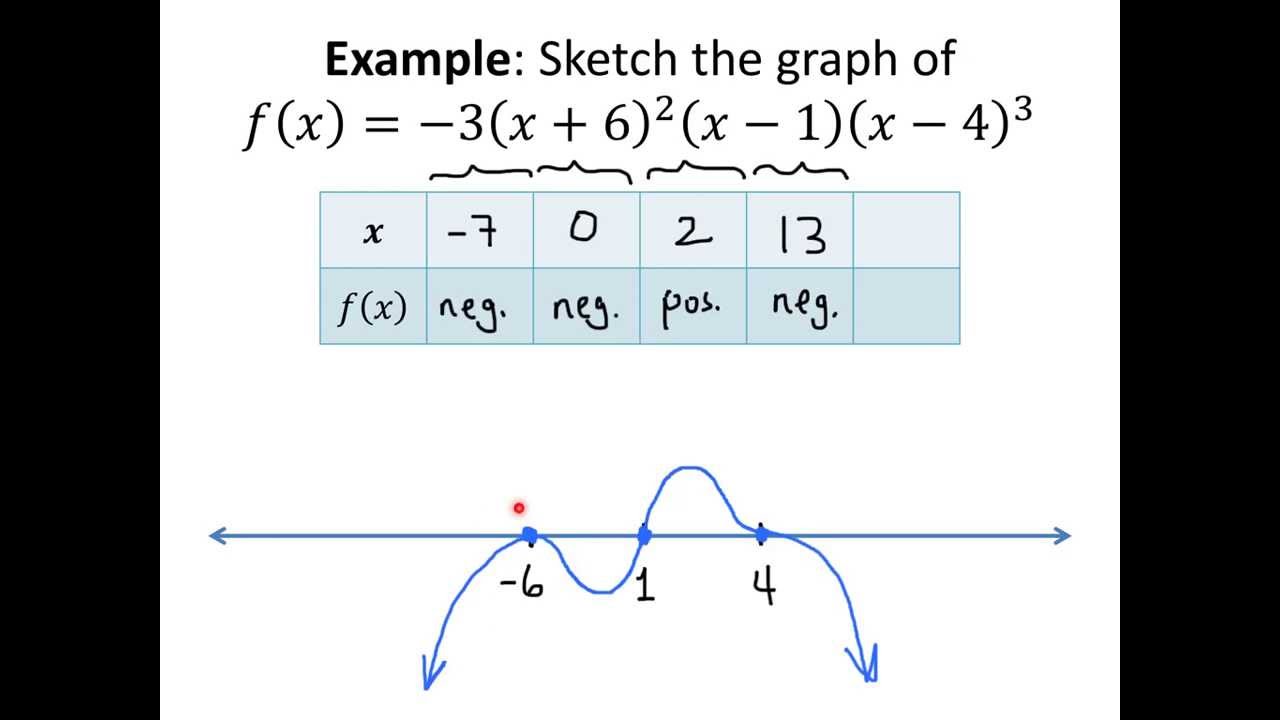
What is a sign chart in calculus?

How to Understand Sign Diagrams

How to Understand Sign Diagrams
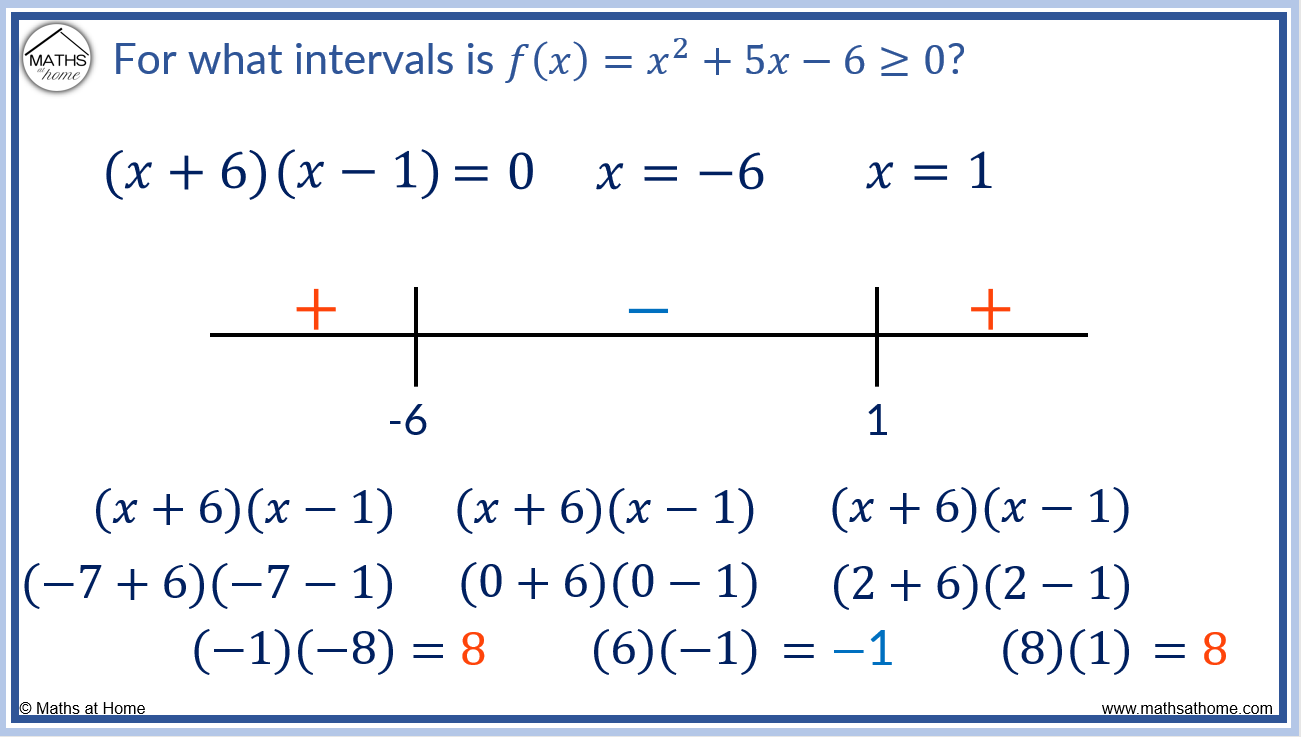
How to Understand Sign Diagrams

How to Understand Sign Diagrams

Solving Inequalities Using sign chart Calculus 1 YouTube

Sign Chart Math A Visual Reference of Charts Chart Master

How to Understand Sign Diagrams

Sign chart calculus qustmama

How to Understand Sign Diagrams
Finding Increasing Interval Given The Derivative.
All The Signs Should Be Positive, Since The Square Of A Nonzero Real Number Is Positive.
Get A Grid Of Sign Charts For A Function And Its First And Second Derivatives.
Find Critical Points Get 3 Of 4 Questions To Level Up!
Related Post: