
Evaporative Cooler Humidity Chart
Evaporative Cooler Humidity Chart - If the humidity in the space is above 60%, it’s best to use a fan or a/c instead. Web the chart shows the effect of the relative humidity of the outside air on the temperature of the air that leaves the evaporative cooling system. In other words, an evaporative cooler makes the most sense, as we’ve noted, in dry air conditions usually found in desert regions. Example temperature & humidity graph. A swamp cooler is a ‘yes’ for you if you live in a dry climate. The process is indicated in the psychrometric chart below. Web evaporative coolers are most efficient in drier climates where the humidity levels stays under 60% most of the time. 46″ l x 26″ w x 59″h. That isn't much and it would get more humid. Web according to this swamp cooler chart, at 80 degrees f at 80% relative humidity, you can drop the temperature 3 degrees. Web we use our own portable evaporative cooling products to keep our manufacturing employees safe and comfortable for more than half the year! The swamp cooler humidity chart spans from 75°f to 125°f temperature and from 2% to 80% relative humidity levels. Always keep in mind that portable evaporative coolers are meant for personal and spot cooling. Web the direct evaporative cooling process in a psychrometric chart. Air temperature starts at 75 and stops at 125 while humidity is usually covered from around 2% to 80%. For temperatures below 75°f and high humidity of over 60% relative humidity, evaporative coolers are. Web what is the ideal humidity for the evaporative air coolers to be the most efficient? Just find the intersection of temperature (on the right) and relative humidity (across the top) to the number on the grid where both measurements meet. Web if you take a measurement of the air temperature and relative humidity in your town, you can use this chart to determine if you have optimal conditions to run an evaporative cooler. Use the calculator below to determine the appropriate cooler sizing based on your needs. Web in general, evaporative coolers work best when the relative humidity is around 70 percent. If the humidity in the space is above 60%, it’s best to use a fan or a/c instead. Perfect for larger patios and workshops, the model mc61v weighs 57 lbs empty and measures 28” wide by 46” tall. Web the direct evaporative cooling process in. Web in general, evaporative coolers work best when the relative humidity is around 70 percent. Air temperature starts at 75 and stops at 125 while humidity is usually covered from around 2% to 80%. Humidity can allow for less substantial temperature drops. For example, at a 90ºf outside temperature, the air would be cooled to about 67ºf if the relative. Web evaporative cooler air temperature relative humidity chart. Web usually, 1 or 2 square feet per 1,000 cfm of cooling capacity is sufficient to allow hot air and humidity to be pushed outside. The answer is it depends. However, they can still be somewhat useful in the more humid climates of the south and midwest, working effectively in fan mode. Web this chart shows that as indoor air temperature rises, an evaporative cooler will become more effective at cooling air as the relative humidity drops. Web pmi evaporative cooling sizing calculator. Web if you take a measurement of the air temperature and relative humidity in your town, you can use this chart to determine if you have optimal conditions to. Use the calculator below to determine the appropriate cooler sizing based on your needs. Web the direct evaporative cooling process in a psychrometric chart. The process is indicated in the psychrometric chart below. Perfect for larger patios and workshops, the model mc61v weighs 57 lbs empty and measures 28” wide by 46” tall. Web in conditions of high temperatures such. Web that’s the evaporative cooler humidity chart. Web in general, evaporative coolers work best when the relative humidity is around 70 percent. In other words, an evaporative cooler makes the most sense, as we’ve noted, in dry air conditions usually found in desert regions. Web evaporative cooler humidity chart. If the humidity in the space is above 60%, it’s best. Air at with dry bulb temperature 70 of and relative moisture 60% (state a) is cooled down (state b) by evaporating water. Web usually, 1 or 2 square feet per 1,000 cfm of cooling capacity is sufficient to allow hot air and humidity to be pushed outside. In other words, an evaporative cooler makes the most sense, as we’ve noted,. Web evaporative coolers are most efficient in drier climates where the humidity levels stays under 60% most of the time. Web in general, evaporative coolers work best when the relative humidity is around 70 percent. Web if you want to check this, you can calculate the relative humidity from the dew point and the outdoor temperature, and you can use. Web evaporative cooler humidity chart. The process is indicated in the psychrometric chart below. Web evaporative coolers are least effective in lower temperature (below 75°f) and high humidity (above 60% relative humidity) situations. Start by selecting the a geographic location the cooler will be used in and then cooler model. Mold and mildew could become an issue. Web usually, 1 or 2 square feet per 1,000 cfm of cooling capacity is sufficient to allow hot air and humidity to be pushed outside. Web evaporative coolers are least effective in lower temperature (below 75°f) and high humidity (above 60% relative humidity) situations. It is also less expensive than air conditioning, as evaporative cooling requires only electricity and water.. Web in conditions of high temperatures such as 85°f or greater, and low humidity of below 50% relative humidity, evaporative coolers perform best. Web according to this swamp cooler chart, at 80 degrees f at 80% relative humidity, you can drop the temperature 3 degrees. The answer is it depends. Just find the intersection of temperature (on the right) and relative humidity (across the top) to the number on the grid where both measurements meet. Start by selecting the a geographic location the cooler will be used in and then cooler model. Example temperature & humidity graph. Once it’s above 75 percent, they lose effectiveness and can actually make things feel worse as they tend to make the air more damp. Web although specifications may vary by unit, most manufacturers recommend operating an evaporative cooler in an area where the temperature is above 80 degrees fahrenheit and below 60% humidity. 46″ l x 26″ w x 59″h. Web pmi evaporative cooling sizing calculator. Here’s an overview example of the heat/humidity with expected temperature drops from evaporative cooling: In other words, an evaporative cooler makes the most sense, as we’ve noted, in dry air conditions usually found in desert regions. Directed to serve evaporative cooling professionals , growing by their feedback. Web usually, 1 or 2 square feet per 1,000 cfm of cooling capacity is sufficient to allow hot air and humidity to be pushed outside. The swamp cooler humidity chart spans from 75°f to 125°f temperature and from 2% to 80% relative humidity levels. Web if you take a measurement of the air temperature and relative humidity in your town, you can use this chart to determine if you have optimal conditions to run an evaporative cooler.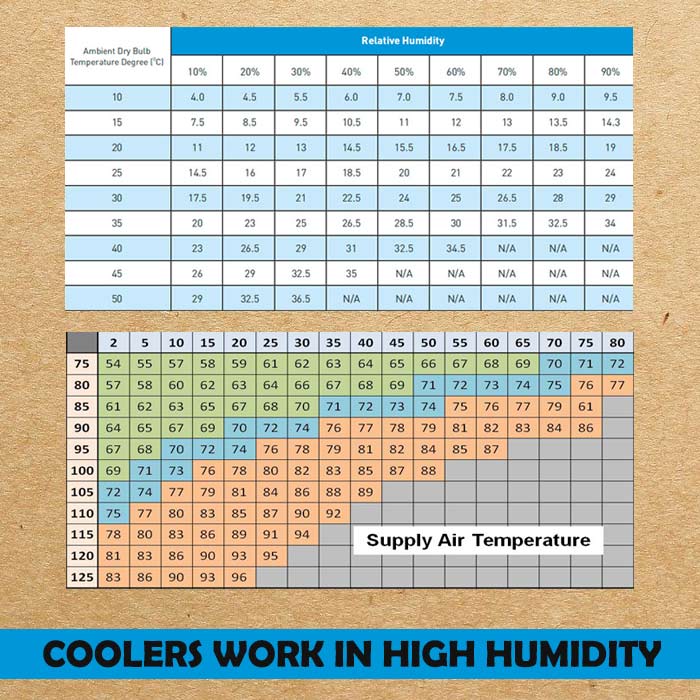
Evaporative Cooler Humidity Chart

How Efficient Is an Evaporative Cooler? (Chart and How it Works)

Evaporative Cooler Humidity Chart

Evaporative Cooler Humidity Chart A Visual Reference of Charts Chart
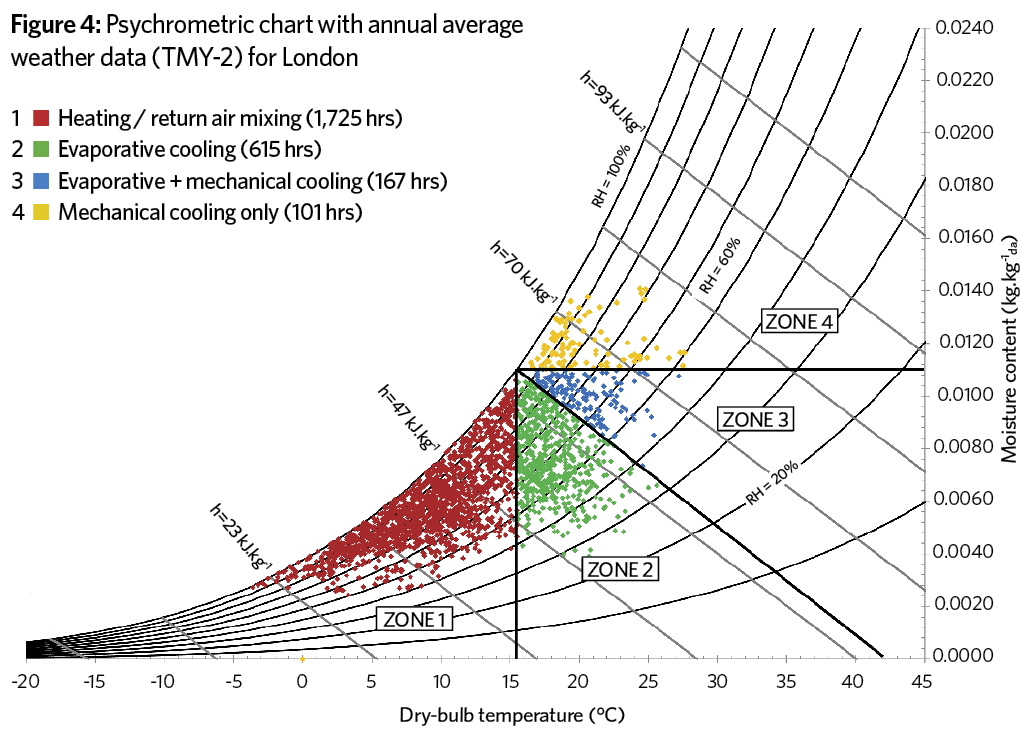
Evaporative Cooling Psychrometric Chart A Visual Reference of Charts

Evap Cooler Humidity Chart Labb by AG

Evaporative Cooler Humidity Chart
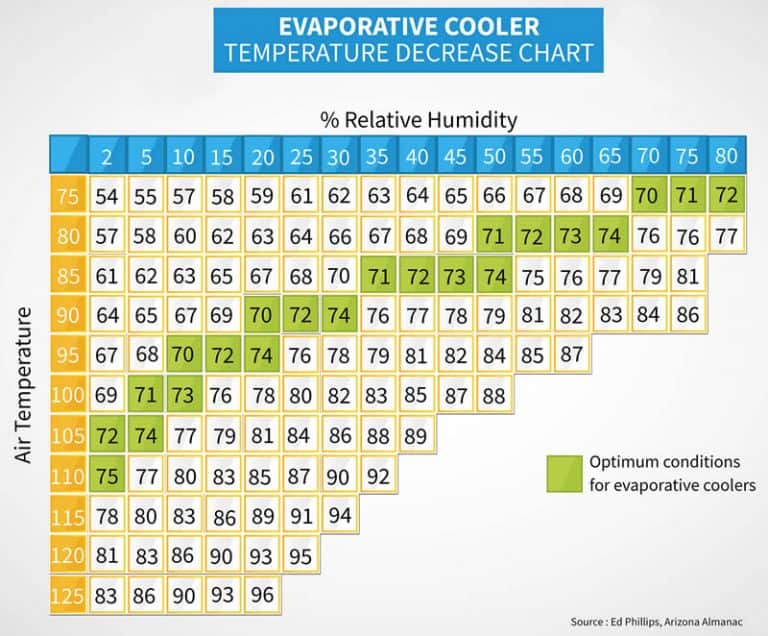
Guide to Evaporative Coolers in Greenhouses Greenhouse Info

Evap Cooler Humidity Chart
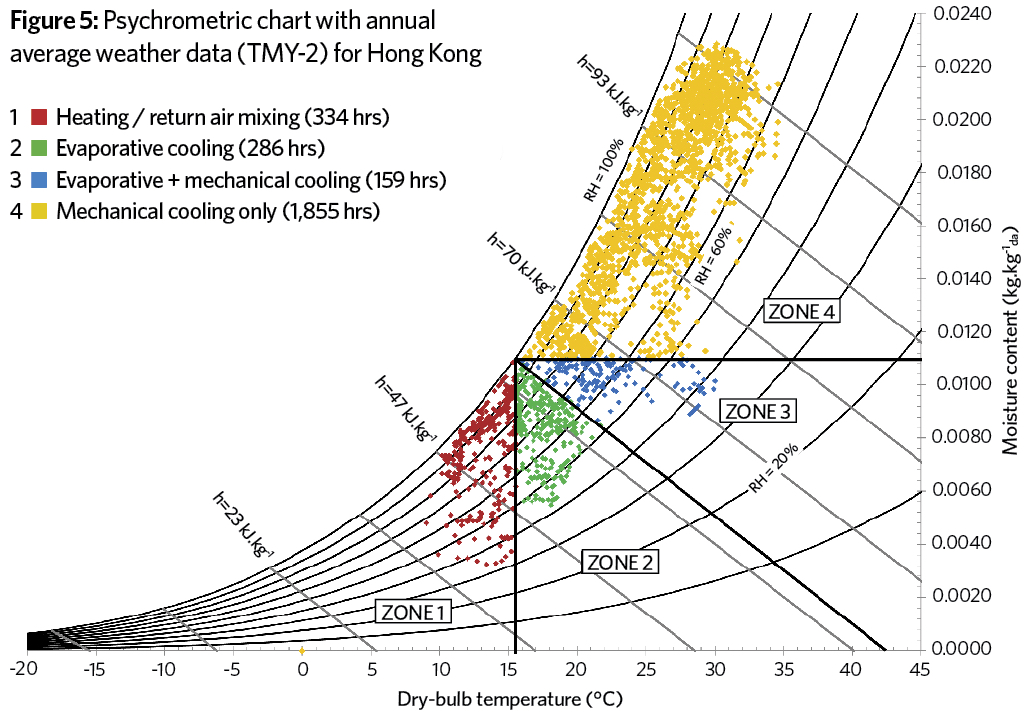
Swamp Cooler Temperature Humidity Chart Sante Blog
It Is Also Less Expensive Than Air Conditioning, As Evaporative Cooling Requires Only Electricity And Water.
Web Evaporative Coolers Are Least Effective In Lower Temperature (Below 75°F) And High Humidity (Above 60% Relative Humidity) Situations.
Web The Direct Evaporative Cooling Process In A Psychrometric Chart.
There Are Big Differences Between Hot And Arid Climates Like Arizona Versus Hot And Humid Climates Like Florida.
Related Post: